

Trade Crate
Trade Crate · automation block · Tradery · updated in 1.2.0
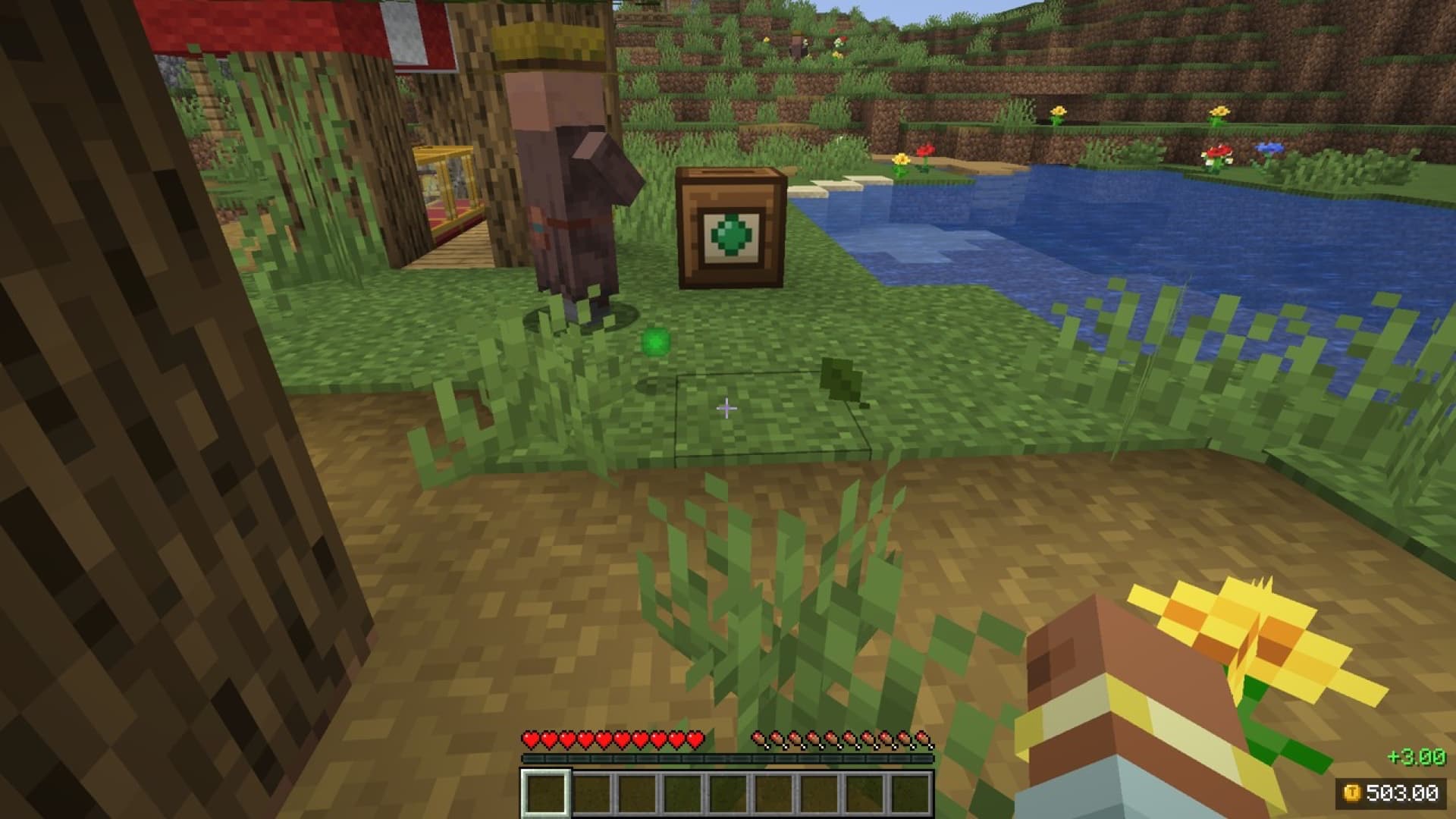
A trade crate trades with villagers while you do something else. Put up to three items into its "Wants" slots; they are copies, like the goods of a vending block. A villager within 32 blocks whose own offers give one of those items walks up, looks at the crate for two seconds and does that trade with it. It repeats the trade as often as the offer's uses, the payment and the room allow, 16 times a visit at most.
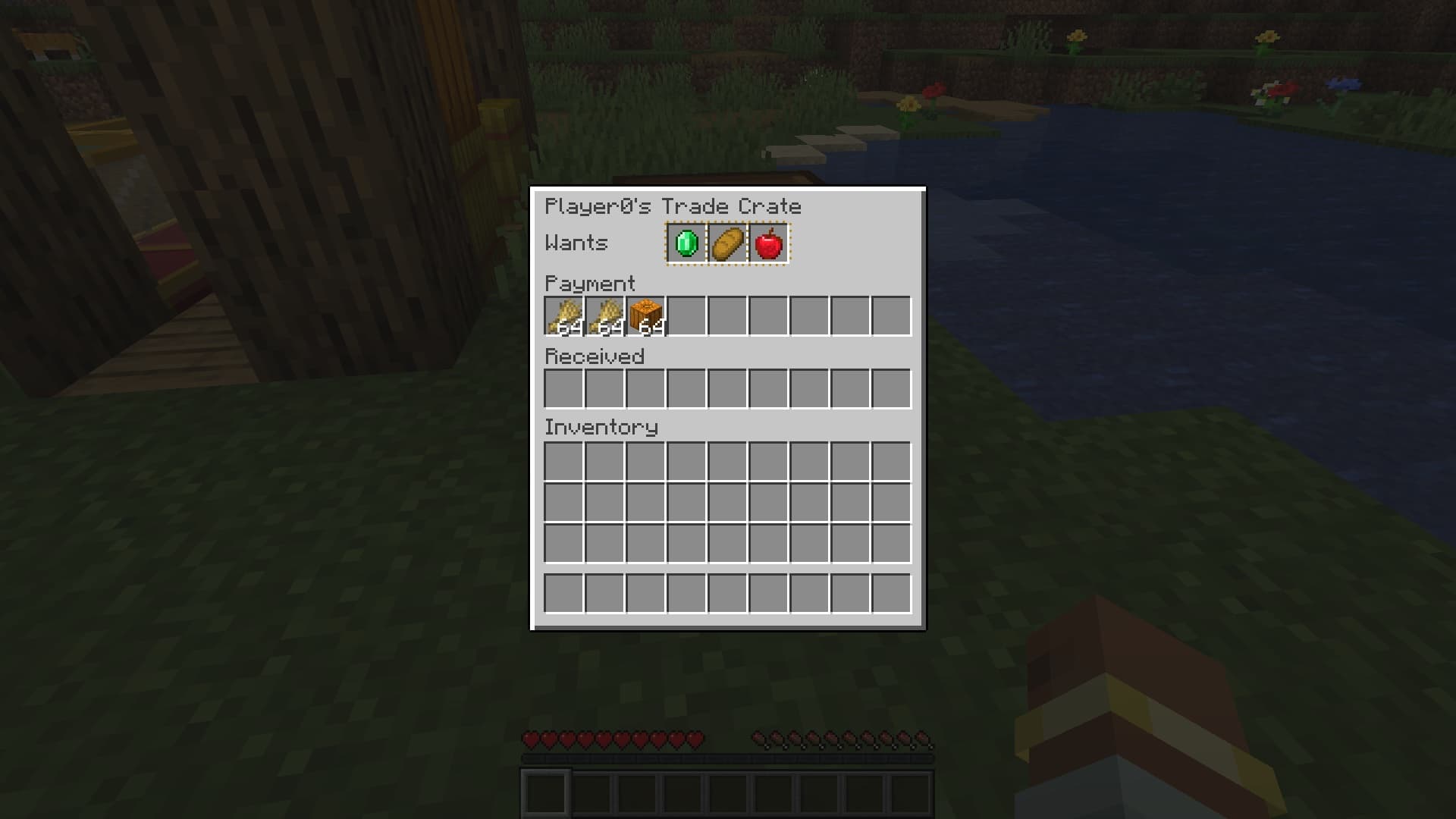
The three rows
- "Wants": 3 slots for what you're after.
- "Payment": 9 slots for what the villager asks in return, such as wheat, books or sticks.
- "Received": 9 slots where the goods end up.
Price and emeralds
The price is the villager's own, with the discount your reputation with it gives you. Trades go through while you're offline. The villager gains experience and levels up as it would from trading with you in person.
Emeralds follow the villagers' trade window. While trading for money is on, which is the default, an emerald is money: emeralds the villager asks for are paid from your balance, and emeralds it would give are paid from its wallet to your balance. With villagerTrading.enabled: false emeralds are items, taken from "Payment" and put into "Received".
If an item is missing, there's no room, or one side can't pay, the trade doesn't happen and nothing moves.
Hoppers and comparators
Hoppers and pipes put items into "Payment" from the top and the sides and take items out of "Received" from below. They can't reach the other half. A comparator reads how full "Received" is. tradeCrates.hoppers: false closes the crate to them.
Ownership
Only the owner opens or breaks a crate; anyone else gets "This trade crate isn't yours". An admin holding the Vendor Key can do both. Explosions and pistons leave it alone. A crate counts toward vending.maxPerPlayer and is listed in the Shop Ledger.
Crafting


 Any planks × 7
 Emerald × 1
 Chest × 1
Crafting table.